

How long does international pet relocation take?
Most international pet relocations take between about 4 weeks and 6 months from the day you start to your pet’s arrival, with the majority of moves landing in the 1–3 month range. The single biggest variable is the destination country: a move to Canada or much of Europe can often be completed in a few weeks, while rabies-controlled destinations such as Australia, New Zealand, Japan, and Hawaii can require 4–7 months because of mandatory blood testing and waiting periods. The earlier you start, the more scheduling flexibility you have. For what each step costs, see our International Pet Relocation Cost guide.
In This Guide:
- When should I start the process?
- Why do some destinations take longer?
- How long is the rabies vaccination waiting period?
- What is a rabies titer (FAVN) test, and how much time does it add?
- How long do USDA endorsement and import permits take?
- How long is quarantine on arrival?
- Does choosing the right travel crate affect my timeline?
- What can delay my move — and can it be expedited?
Frequently Asked Questions: International Pet Relocation Timeline
1. When should I start the international pet relocation process?
As a rule of thumb, begin at least 2–3 months before your planned move date for most destinations, and 6 or more months ahead for rabies-free or high-requirement countries such as Australia, New Zealand, and Japan. Starting early protects you against the two things that derail timelines most often: rabies vaccination and titer waiting periods that cannot be shortened, and limited pet cargo space on the exact dates you need. Even if your travel dates aren’t final, the microchip and rabies steps can usually begin right away.
2. Why do some destinations take so much longer than others?
Each country sets its own import rules, and those rules drive the timeline. Lower-requirement destinations — such as Canada, much of the EU, and the UK — mainly need a microchip, a current rabies vaccination, and a USDA-endorsed health certificate, which can come together in a matter of weeks. Rabies-free or rabies-controlled countries such as Australia, New Zealand, Japan, and Hawaii require a rabies antibody titer test followed by a mandatory waiting period that can run several months. Import permits, quarantine, and seasonal airline heat embargoes can add still more time.
3. How long is the rabies vaccination waiting period?
For destinations that accept a standard rabies vaccination, pets generally must be vaccinated and then wait at least 21–30 days before they are eligible to travel, with the exact window depending on the country and the vaccine. One rule applies almost everywhere: the rabies vaccination must be given after the microchip is implanted — if the vaccine predates the chip, many countries consider it invalid and the clock starts over. Destinations that require a titer test have a longer timeline (see the next question).
4. What is a rabies titer (FAVN) test, and how much time does it add?
A rabies titer test (also called a FAVN or RNATT) is a blood test that confirms your pet’s rabies vaccination produced a sufficient antibody level. Rabies-free countries require it and impose a waiting period after a successful result — commonly around three months (for example, Australia requires roughly a 90-day wait), with waiting periods also applying to Japan and others. Because the blood draw, lab processing, and the post-test wait stack up, titer-required destinations are the longest moves and should be started six or more months out.
5. How long do USDA APHIS endorsement and import permits take?
Once your veterinarian completes the health certificate, USDA APHIS endorsement through the VEHCS system is usually quick — often a few business days — but it must happen inside each country’s required window before departure (for some countries as tight as 48 hours to 10 days before arrival). Import permits, where required, vary widely: some are issued in days, others take several weeks, so confirm permit lead time early so it doesn’t become the bottleneck.
6. How long is quarantine on arrival?
It depends entirely on the destination. Many countries — including the UK, most of the EU, and Canada — require no quarantine when the paperwork is complete. Others inspect pets on arrival and release healthy, fully documented animals the same day. A few rabies-free countries require a fixed quarantine stay; Australia, for example, requires a minimum government quarantine stay at its Mickleham facility — typically 30 days, though some eligible pets qualify for a reduced 10-day minimum. For a full breakdown by destination, see our guide to pet quarantine by country, and always confirm the destination’s current policy as part of your planning.
7. Does choosing the right travel crate affect my timeline?
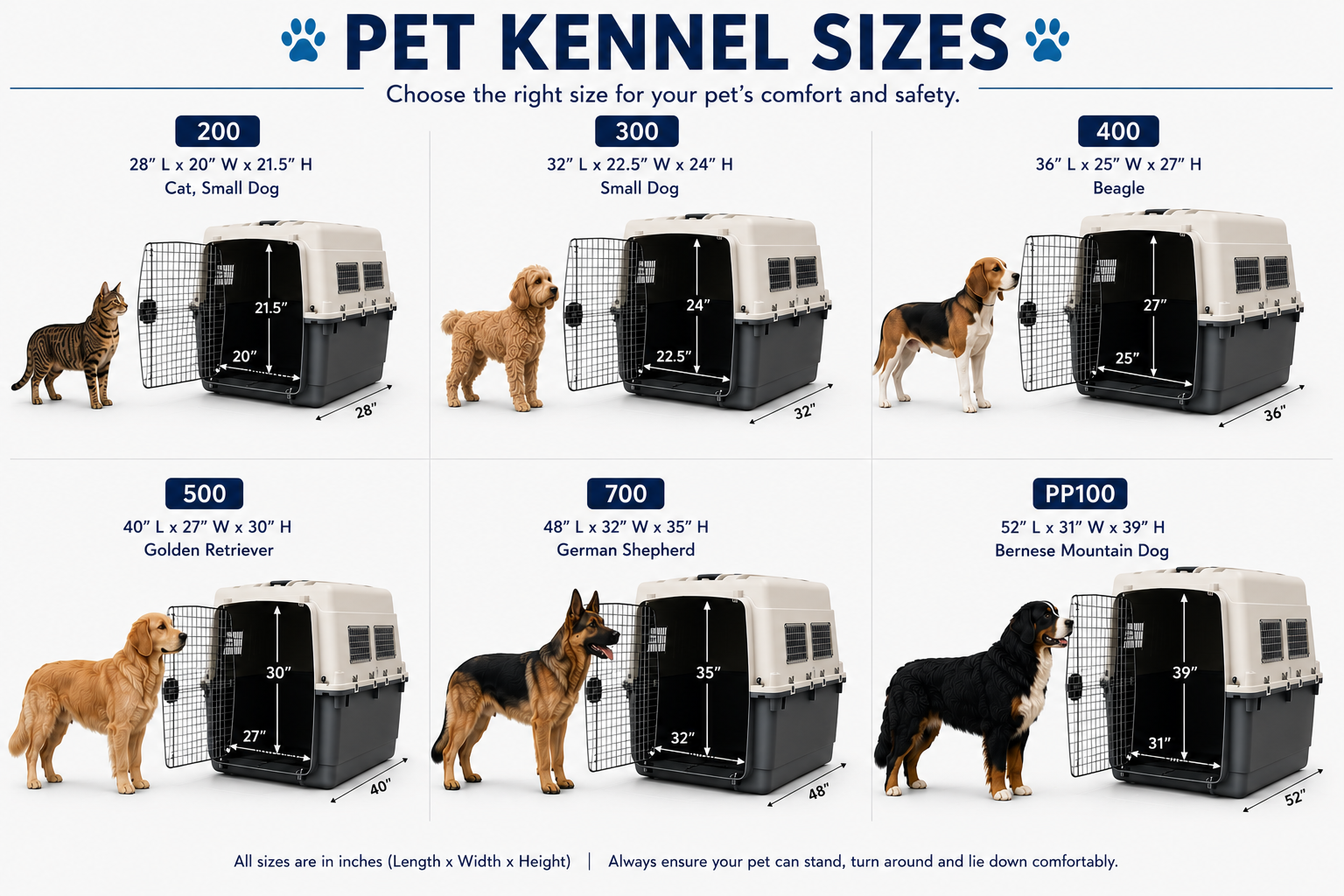
Yes — indirectly, and it’s a step people underestimate. Your pet must travel in an IATA-compliant crate that is correctly sized; airlines will refuse a pet whose kennel is too small. If your pet needs a larger or custom crate, sourcing it — and giving your pet time to get comfortable in it — can add days or weeks, so size the crate early rather than in the final week before departure. Use our guide on How to Measure Your Dog for a Flight Kennel to get the dimensions right, and the chart below for common kennel sizes.
8. What can delay my move — and can it be expedited?
The most common delays are starting the rabies or titer steps too late, microchipping after the rabies vaccine (which invalidates it), missing a health-certificate or endorsement window, import-permit processing, last-minute crate sizing, and limited pet cargo space or seasonal heat embargoes on your travel dates. Some steps can be expedited — vet visits, crate purchase, and cargo booking — but the rabies and titer waiting periods are fixed by regulation and cannot be shortened. That is exactly why early planning is the single best way to keep a relocation on schedule.
Get a Quote and a Personalized Timeline
Every destination has its own clock. Animal Land can map out the exact timeline for your pet’s move and handle each step in the right order. Request a free quote to get started.
About the Author

Marc Morrison
Marc Morrison is the founder of Animal Land Pet Movers, an Atlanta-based international pet relocation company he established in 1998. With over 25 years of experience coordinating pet moves to more than 100 countries worldwide, Marc and his team have guided thousands of families through the documentation, logistics, and timelines involved in international pet travel. Learn more about Marc Morrison.