
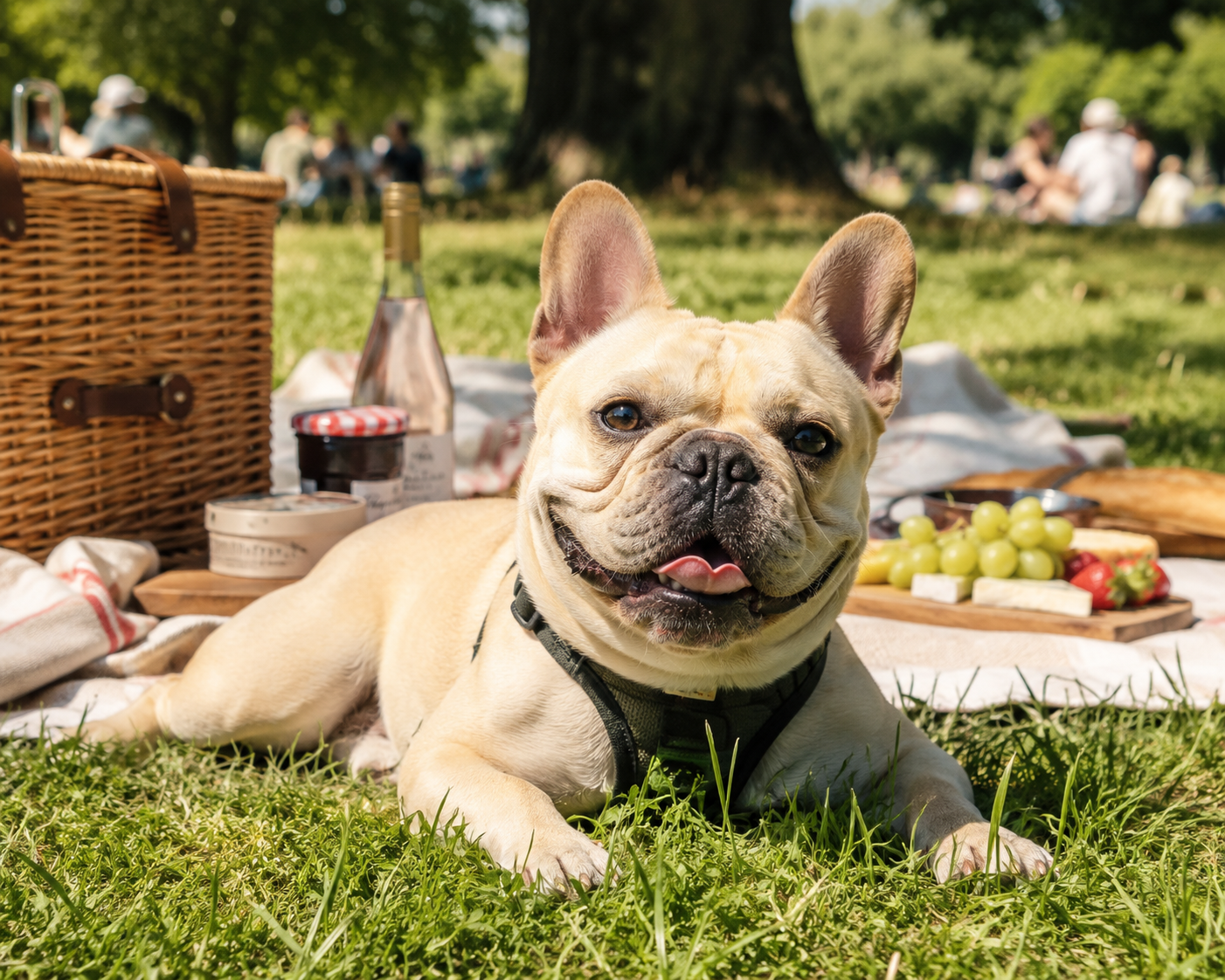
Can brachycephalic dogs fly internationally?
Yes — but it takes careful planning, and the options are more limited than for other breeds. Brachycephalic (snub-nosed) dogs such as French Bulldogs, English Bulldogs, and Pugs can travel internationally, but most airlines restrict or outright ban them from the cargo hold because their short airways make them far more vulnerable to breathing difficulty and overheating. Whether your snub-nosed dog can fly comes down to the specific airline, the route, the season and temperature, and your dog’s size and health. With the right carrier, routing, and crate, many brachycephalic dogs relocate safely every year.
In This Guide:
- What does “brachycephalic” mean, and which breeds are affected?
- Why is air travel riskier for snub-nosed dogs?
- Can brachycephalic dogs fly in the cargo hold?
- Can a snub-nosed dog fly in the cabin instead?
- Do temperature and season affect whether my dog can fly?
- Are brachycephalic cats restricted too?
- How can I help my snub-nosed dog fly safely?
- Should I use a professional pet relocation company?
Frequently Asked Questions: Flying With Brachycephalic Dogs
1. What does “brachycephalic” mean, and which breeds are affected?
“Brachycephalic” describes dogs (and cats) with a short skull and a flat, pushed-in face — the “snub-nosed” look. Their shortened airways give them less capacity to cool themselves and breathe efficiently. Commonly affected dog breeds include the French Bulldog, English Bulldog, Pug, Boston Terrier, Boxer, Pekingese, Shih Tzu, Lhasa Apso, Brussels Griffon, Japanese Chin, Chow Chow, Bullmastiff, and similar flat-faced breeds and their mixes.
2. Why is air travel riskier for snub-nosed dogs?
Brachycephalic dogs are prone to Brachycephalic Obstructive Airway Syndrome (BOAS), which makes breathing harder, especially under stress or heat. Air travel adds stress, temperature swings, and changes in air quality — conditions that can trigger respiratory distress. Because of a history of in-transit incidents with these breeds, many airlines concluded the cargo environment is too risky and restricted them. A dog with significant BOAS should not fly in cargo at all.
3. Can brachycephalic dogs fly in the cargo hold?
Often no. Most major airlines restrict or ban snub-nosed breeds from traveling as manifest cargo or checked baggage due to the respiratory and heat risks, and some prohibit them entirely. Policies vary significantly by carrier and route, and there is no single industry-wide list — so the practical question is always “which specific airlines will accept this breed on this route, and under what conditions?” That is the core of planning a brachycephalic move.
4. Can a snub-nosed dog fly in the cabin instead?
Sometimes. Small brachycephalic dogs that fit in an airline-approved carrier under the seat may be able to fly in the cabin, where conditions are more controlled — but cabin pet space is limited, rules vary by airline and route, and most international long-haul flights have strict cabin pet limits. Larger snub-nosed dogs that exceed cabin size limits cannot use this option, which is why routing and carrier selection matter so much for these breeds.
For cats and smaller dogs, in-cabin travel is often the best and least stressful option, keeping your pet in the controlled cabin environment beside a person rather than in the hold. Animal Land also offers in-cabin flight attendants — trained pet travel chaperones who personally accompany your pet in the cabin — upon request.
5. Do temperature and season affect whether my dog can fly?
Yes, significantly. Because brachycephalic dogs overheat easily, many airlines impose seasonal heat embargoes and will not accept them when temperatures along the route exceed a set limit (often around 75–85°F / 24–29°C) at any airport on the journey. Planning travel for cooler months, cooler times of day, and routes that avoid hot connecting hubs can be the difference between a dog being accepted or refused.
6. Are brachycephalic cats restricted too?
They can be. Flat-faced cat breeds — such as Persians, Himalayans, Exotic Shorthairs, and Burmese — share the same airway and heat sensitivities, and some airlines apply snub-nosed restrictions to cats as well. The risk is generally lower than for large brachycephalic dogs, and many flat-faced cats travel comfortably in the cabin, but the airline’s specific policy should always be confirmed.
7. How can I help my snub-nosed dog fly safely?
Several steps meaningfully reduce the risk: We can help navigate through all of the options
- Choose the right airline and route — use carriers that accept the breed and prefer direct or short routings.
- Travel in cool conditions — cooler months and times of day, avoiding hot layover airports.
- Use a larger, well-ventilated crate — for snub-nosed breeds, a crate one size larger than normal is recommended for extra airflow, in keeping with the IATA Live Animals Regulations. Our guide on how to measure your dog for a flight kennel can help.
- Do not sedate — sedation is widely discouraged for air travel, and especially dangerous for brachycephalic dogs, because it can further impair breathing at altitude.
- Get a veterinary check — a vet can evaluate your dog’s airway and overall fitness to travel.
8. Should I use a professional pet relocation company for a brachycephalic breed?
For snub-nosed breeds, professional help is especially valuable. Because acceptance depends on the exact airline, route, season, and crate, an experienced pet relocation company — ideally a member of IPATA, the International Pet and Animal Transportation Association — can identify which carriers will take your breed, build a routing that avoids heat embargoes, and handle the crate and documentation correctly. Animal Land is an IPATA member and has relocated many brachycephalic dogs and cats, planning each move around their specific needs.
Get Help Relocating a Brachycephalic Pet
Snub-nosed breeds need a carefully chosen airline, route, and season. Animal Land can build a safe plan for your French Bulldog, Pug, Bulldog, or other flat-faced pet. Request a free quote to get started.
About the Author
Marc Morrison
Marc Morrison is the founder of Animal Land Pet Movers, an Atlanta-based international pet relocation company he established in 1998. With over 25 years of experience coordinating pet moves to more than 100 countries worldwide — including many brachycephalic breeds — Marc and his team help families navigate airline rules, routing, and crate requirements for safe international pet travel. Learn more about Marc Morrison.