

How Much Does International Pet Relocation Cost?
Well of course the answer is “It depends.” The cost of international pet relocation can vary significantly depending on your destination, your pet’s size, airline availability, veterinary requirements, and other factors. While every move is unique, the following estimates can help you understand typical costs for professionally managed international pet transportation.
Typical International Pet Relocation Cost by Destination
| Destination | Typical Cost Range |
|---|---|
| South Africa | $4,500 – $10,000 |
| Europe | $2,500 – $6,000+ |
| United Kingdom | $3,500 – $8,000+ |
| Australia | $6,000 – $15,000+ |
| Middle East | $4,000 – $8,000+ |
| Singapore | $4,000 – $10,000 |
| Thailand | $2,500 – $6,000 |
| Japan | $4,000 – $10,000 |
These estimates generally include airline transportation and the coordination required to meet destination-country import requirements. Additional services such as veterinary visits, customs clearance, quarantine arrangements, specialized routing, and ground transportation may increase the total cost.
The best way to determine the cost of relocating your pet internationally is to obtain a customized quote based on your pet, destination, travel dates, and specific requirements. Request a customized quote for your pet’s relocation here.
What Factors Affect International Pet Relocation Costs?
No two pet relocations are exactly alike. Several factors determine the final cost of moving a pet internationally.
Pet Size and Number of Pets
One of the largest factors affecting cost is the size of your pet. Airlines typically calculate pet transportation charges based on the combined dimensions and weight of the travel kennel. A larger dog often requires more cargo space than a smaller dog or cat, which increases transportation costs.
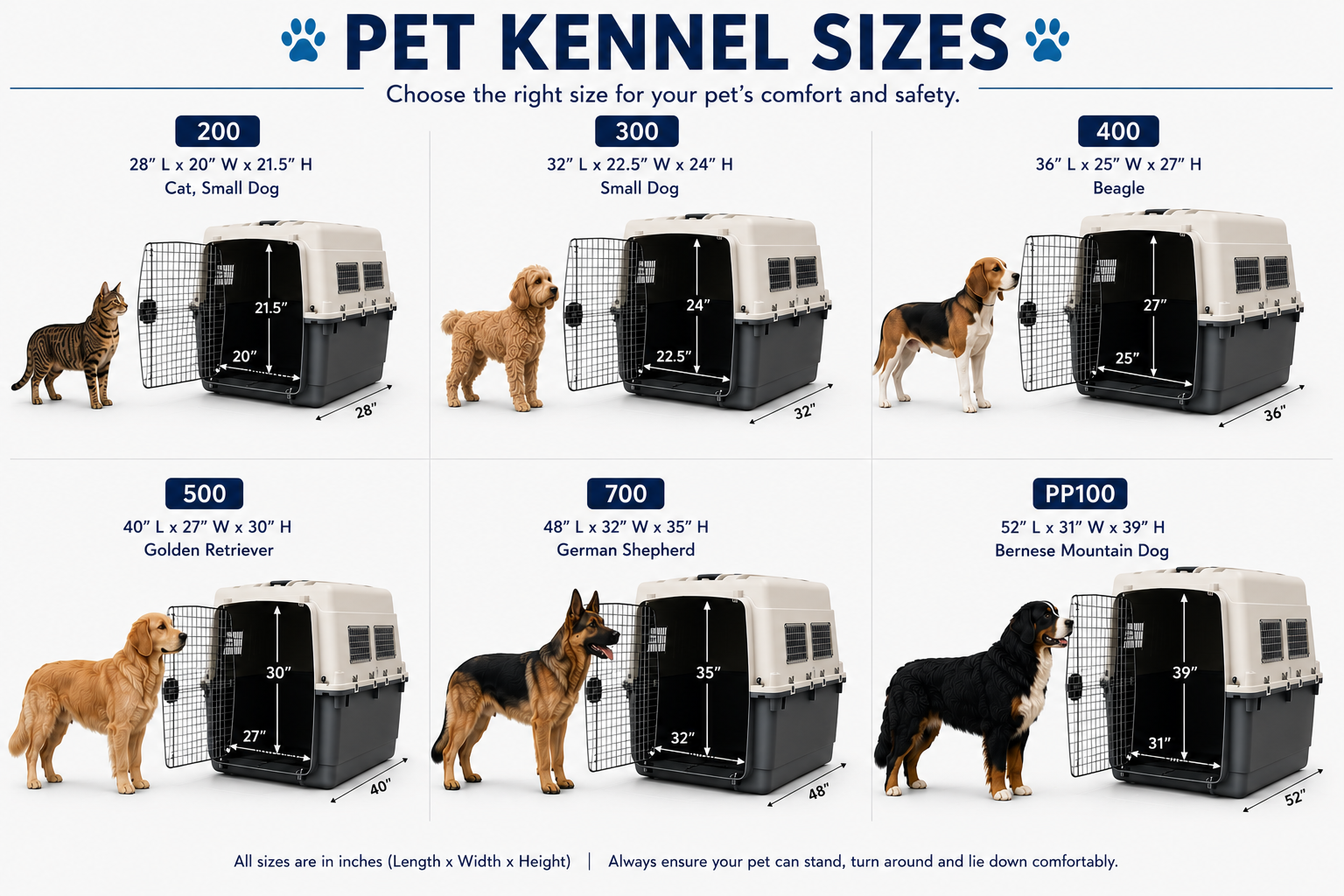
- A small cat may travel in a 200-series kennel
- A Golden Retriever may require a 500-series kennel or a 700-series. Measure carefully
- A German Shepherd may require a 700-series kennel or PP100. Measure carefully
- Giant breeds may require custom or oversized kennels
Because airline charges are frequently based on volumetric space rather than simply weight, larger pets generally cost more to transport internationally.
Crate Size
International regulations require pets to travel in airline-approved kennels that provide sufficient room to stand naturally, sit comfortably, turn around, and lie down without restriction. Larger kennels occupy more aircraft cargo space and often result in higher airline transportation fees.
When selecting a kennel, the goal is not to use the smallest crate possible — the kennel must be appropriately sized to ensure your pet’s comfort and compliance with airline and international regulations. Airlines will reject pets when the kennel is too small, so getting the right size is crucial.
Where You’re Coming From
Most airlines servicing international destinations will only fly pets out of major hub cities. Consequently, you may need to arrange to get your pets to the appropriate departure city, which can add additional costs. Common international pet departure hubs include:
- Atlanta
- Boston
- Chicago
- Dallas
- Houston
- Los Angeles
- Miami
- New York
- San Francisco
Destination Country
Different countries have different import requirements. Some destinations require relatively straightforward documentation, while others involve extensive preparation and coordination. Factors that may increase costs include import permits, government fees, veterinary inspections, specialized routing, mandatory broker services, and quarantine requirements. For example, relocating a pet to Thailand is generally simpler and less expensive than relocating a pet to Australia.
Airline Availability
Not every airline accepts pets on every route. In many cases, specialized routing is required to comply with seasonal temperature restrictions, breed restrictions, country-specific entry requirements, and aircraft limitations. Limited airline availability can increase costs, particularly when additional connections or specialized carriers are required.
Veterinary Requirements
Most countries require some combination of rabies vaccination, microchip identification, health certificates, parasite treatments, blood testing, and USDA endorsement. Countries such as Australia, New Zealand, and Japan may require additional testing and preparation months before departure. These veterinary requirements can contribute significantly to the overall relocation cost.
Ground Transportation
Many families choose door-to-door relocation services. Ground transportation may include pickup from your residence, transportation to the airport, customs pickup, and delivery to your new home. Depending on distance and location, ground transportation can be a significant component of the overall project.
Customs Clearance
Certain countries require customs brokers or destination agents to process pet imports. These services may include import documentation review, customs processing, airport clearance, and government inspection coordination. Countries with more complex import procedures typically have higher clearance-related costs.
Frequently Asked Questions
Why Is Australia More Expensive?
Australia has some of the world’s strictest animal import regulations. Pets entering Australia typically require extended preparation timelines, rabies antibody testing, import permits, government inspections, and a mandatory quarantine stay. In addition, the long flight distance from North America contributes to higher airline transportation costs. Because of these requirements, Australia is often one of the most expensive international pet relocation destinations. See our guide to pet quarantine by country for the full picture.
Can I Save Money By Relocating My Pet Myself?
In most situations, yes. However, many pet owners discover that managing international pet travel themselves can be time-consuming and stressful — and for some countries, the consequences of not doing it correctly can be expensive and time-consuming. Common challenges include understanding country-specific regulations, coordinating veterinary requirements, obtaining proper documentation, scheduling airline transportation, and managing customs clearance. Professional pet relocation services can help reduce the risk of costly delays, missed requirements, or travel disruptions.
Are Airline Fees Included?
Every relocation quote is different. Depending on the service package selected, airline transportation may be included as part of a comprehensive relocation program. Additional services such as veterinary care, customs clearance, and ground transportation may be quoted separately. At Animal Land Pet Movers, every quote includes airline fees — we are a full-service company.
Does Pet Size Affect Cost?
Yes. Pet size is one of the most important factors affecting relocation cost. Larger pets require larger kennels, more cargo space, and incur increased airline charges. As a result, relocating a large dog generally costs more than relocating a small dog or cat. This also applies to the number of pets — the more pets, the higher the cost. However, when sending multiple pets in the same shipment, the per-pet cost is significantly reduced.
Why Trust This Information?
This guide was prepared by Animal Land Pet Movers, an international pet relocation company that has assisted families with domestic and international pet transportation since 1998. Our team works with pet owners, military families, expatriates, corporate transferees, and international travelers to coordinate pet relocations throughout the world. Animal Land Pet Movers offers more than 25 years of pet transportation experience, service to destinations around the globe, IPATA membership, USDA registration, and a knowledgeable team experienced in international pet travel requirements.
Because regulations, airline policies, and import requirements change regularly, pet owners should always confirm current requirements before making travel plans.
Need an Exact Quote?
The estimates above are intended as general guidelines. Actual relocation costs depend on your pet’s size, destination, airline routing, veterinary requirements, and travel timeline.
About the Author

Marc Morrison
Marc Morrison has worked in the pet transportation industry since 1998 and has helped coordinate domestic and international pet relocations for families, military personnel, expatriates, and corporate transferees worldwide. His goal is to help families safely and successfully reunite with their pets wherever life takes them. Learn more about Marc.