
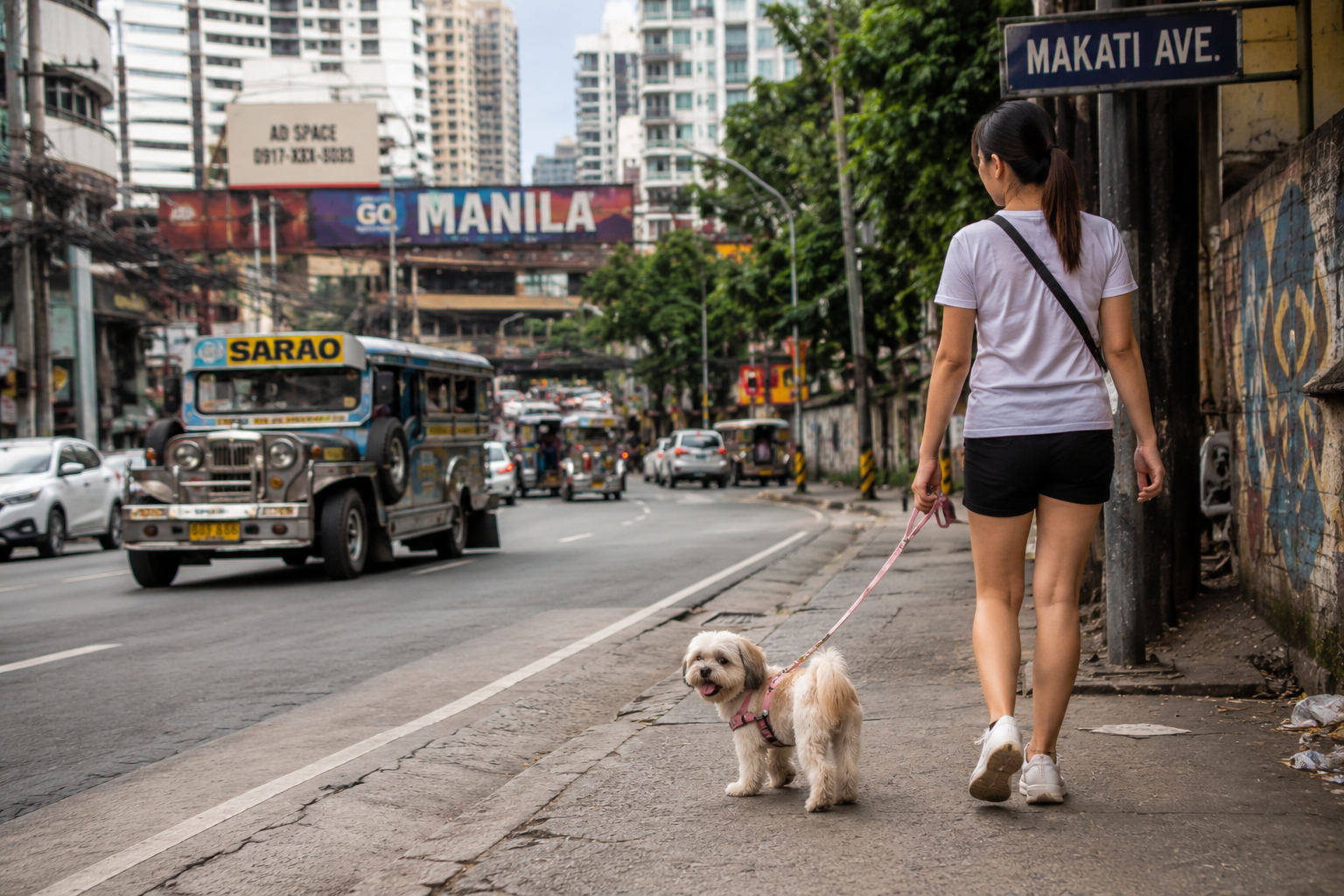
Can I move my dog or cat from the United States to the Philippines?
Yes. Pet relocation to the Philippines is straightforward when the paperwork is done in the right order. Your dog or cat must be at least 120 days old, identified with an ISO-compatible microchip, currently vaccinated against rabies (and the other diseases the Philippines requires), treated for internal and external parasites, and covered by a USDA-endorsed veterinary health certificate. Before travel, you must obtain a Sanitary and Phytosanitary Import Clearance (SPSIC) from the Philippine Bureau of Animal Industry (BAI). With complete documentation, pets are typically inspected and released the same day on arrival — there is no facility quarantine.
In This Guide:
Why Families Choose Animal Land for Philippines Pet Relocation
Pet relocation to the Philippines involves coordinating a government import clearance, a precise vaccination and parasite-treatment schedule, and a USDA-endorsed health certificate — all on a timeline that has to line up with your flights. A single misstep, such as an SPS clearance that hasn’t been approved before departure or a health certificate dated outside the allowed window, can lead to problems at the port of entry.
Animal Land Pet Movers has been relocating dogs and cats internationally since 1998. Our coordinators manage every step of pet relocation to the Philippines — from microchip and vaccination verification to BAI import clearance, USDA APHIS endorsement, and cargo booking into Manila — so your pet arrives safely and is released without delay.
Pet Relocation to the Philippines: Step by Step Requirements
The authoritative US-side overview is on the USDA APHIS Pet Travel to the Philippines page, and the destination rules are set by the Philippine Bureau of Animal Industry (BAI). The core steps are below.
Step 1: Microchip
Your dog or cat must be identified with an ISO-compatible microchip (ISO 11784/11785) that can be read by a standard ISO reader. Microchip your pet before the rabies vaccination so the vaccination and health records can be matched to the chip.
Step 2: Rabies and Required Vaccinations
Your pet must be vaccinated against rabies at a minimum age of 12 weeks, and the vaccination must be given at least 14 days before the SPS import clearance application and remain valid through the date of arrival. The Philippines also requires core vaccinations beyond rabies: dogs need distemper, hepatitis (adenovirus), leptospirosis, parainfluenza, and parvovirus; cats need feline panleukopenia (and, per BAI, viral rhinotracheitis and calicivirus). Pets must be at least 120 days old at the time of the SPS clearance application.
Step 3: SPS Import Clearance (SPSIC) From BAI
Before your pet travels, you must obtain an approved Sanitary and Phytosanitary Import Clearance (SPSIC) from the Department of Agriculture–Bureau of Animal Industry, applied for online. For personal pets, select the “one-time importer” option. A single SPSIC covers up to three pets and is valid for about two months, so timing the application to your travel dates matters. The approved clearance must be in hand before departure.
Step 4: Parasite Treatment
A licensed veterinarian must treat your pet against internal and external parasites. Per BAI, this treatment must be administered not more than 91 days and not less than 7 days before the SPS clearance application — so it needs to be scheduled in the correct window, not at the last minute. We have found the optimal timing to be about 2.5 weeks prior to travel.
Step 5: USDA-Endorsed Health Certificate
A USDA-accredited veterinarian must complete the health certificate for the Philippines and submit it for APHIS endorsement through VEHCS. The certificate must be dated within 30 days before arrival and confirm your pet is free of communicable disease and has received the required vaccinations. A printed copy of the endorsed certificate must travel with your pet. PRO TIP – While the The Philippines recognise the health certificate up to 30 days, the airlines require that it be within 10 so careful planning is a must.
Approved Routes and Carriers
Pets traveling to the Philippines must move on an airline and routing that accepts live animals for the full journey. Not every carrier or connection that “allows” pets is suitable, and seasonal heat embargoes and aircraft limitations can affect which routes are available.
Animal Land verifies the carrier and routing before booking, confirms live-animal acceptance on every leg into Manila (or your destination city), and coordinates the cargo space so your pet’s travel matches the validity window of the SPS clearance and health certificate.
Crate Training Your Pet for the Philippines
Your pet must travel in an IATA-compliant travel crate that is correctly sized — large enough to stand, turn, and lie down comfortably. Airlines will refuse a pet whose kennel is too small, so getting the size right is essential. Use our guide on How to Measure Your Dog for a Flight Kennel to choose the correct dimensions.
Crate training should start as early as possible. Pets that are already comfortable in their kennel handle long-haul travel far better than those seeing it for the first time at the airport. Large dogs may need custom crates, which take time to source — another reason to plan early.
How Much Does It Cost to Move a Pet to the Philippines?
The total cost of pet relocation to the Philippines depends on your pet’s size, your departure city, the cargo route, and the services you need. Typical cost components include:
- Veterinary visits, microchip, vaccinations, and parasite treatment
- BAI SPS import clearance fees
- USDA APHIS endorsement fees
- Health certificate preparation
- IATA-approved crate purchase (if needed)
- Air cargo charges to Manila or your destination city
- Airport handling and arrival processing fees
- Professional pet relocation coordination
Because air cargo rates and routing vary by season and availability, Animal Land provides personalized quotes rather than published price ranges. For a fuller breakdown of what drives international pet-moving costs, see our International Pet Relocation Cost guide. To get an estimate for your specific move, request a free quote.
Pet Relocation to the Philippines: Moving to Manila
Manila is the most common destination for families relocating pets to the Philippines, with most pets arriving at Ninoy Aquino International Airport (NAIA). On arrival, you present your pet’s documents — the SPS clearance, the USDA-endorsed health certificate, and vaccination records — to the BAI Veterinary Quarantine Officer at the port. With complete paperwork and fees paid, pets are typically inspected and released the same day, with no facility quarantine.
Metro Manila districts such as Makati, Bonifacio Global City (Taguig), and Quezon City are popular with relocating families and increasingly pet-friendly, with parks and pet services nearby. Animal Land can help connect you with trusted local veterinarians and services as part of your relocation.
How Long Does It Take to Move a Pet to the Philippines?
The timeline is driven by the vaccination and parasite-treatment schedule and the SPS clearance, rather than by flight time. Because the Philippines does not require a rabies titer test, there is no multi-month waiting period as there is for rabies-free countries. For most families, pet relocation to the Philippines takes between 3 and 6 weeks from the time preparation begins to arrival day.
Frequently Asked Questions
Can my cat travel to the Philippines without quarantine?
Yes. Cats that meet the microchip, vaccination, parasite-treatment, SPS clearance, and USDA health-certificate requirements are inspected and released on arrival — there is no facility quarantine. Cats need rabies and feline panleukopenia vaccinations (BAI also lists viral rhinotracheitis and calicivirus).
Do I need a professional pet relocation company for a move to the Philippines?
It is not legally required, but the combination of the BAI import clearance, the strict vaccination and parasite-treatment timing, and the USDA endorsement leaves little room for error — and mistakes can cause delays at the port. Most families find professional coordination well worth it.
Which airlines fly pets to the Philippines?
Availability varies by route and season, and not every airline accepts pets on every leg into Manila. Animal Land confirms live-animal acceptance and books the cargo space as part of the relocation process.
Are any dog breeds banned in the Philippines?
The Philippines does not maintain a breed-specific import ban the way some countries do. However, many airlines restrict snub-nosed (brachycephalic) breeds — such as Bulldogs and Pugs — for safety reasons, which can affect routing. Contact us before booking if you have one of these breeds.
What is the SPS Import Clearance (SPSIC)?
The SPSIC is the Philippine import permit issued by the Bureau of Animal Industry. It must be applied for online and approved before your pet travels. One clearance covers up to three pets and is valid for about two months.
What are the most common mistakes when moving a pet to the Philippines?
The most common mistakes are: applying for the SPS clearance too late (or traveling before it is approved); administering the parasite treatment outside the 7-to-91-day window; vaccinating fewer than 14 days before the clearance application; a health certificate dated outside the 30-day window; and microchipping after vaccination instead of before. Animal Land sequences each step to avoid these.
Does my pet need to travel on an approved route?
Your pet must travel on an airline and routing that accepts live animals for the entire journey. Animal Land verifies the carrier and route before booking any move to the Philippines.
Get a Quote for Pet Relocation to the Philippines
Animal Land has offices in Atlanta, London, and across the globe. Contact our team for a free quote and a step-by-step plan for your move to the Philippines.
About Animal Land
Animal Land Pet Movers
Animal Land Pet Movers is an international pet relocation company established in Atlanta in 1998. With offices around the globe, our team coordinates full-service, door-to-door dog and cat transport to more than 100 countries — managing microchip and vaccination compliance, USDA APHIS health-certificate endorsement, destination import permits, IATA-compliant crating, and air cargo logistics.
- Relocating pets safely since 1998 — more than 25 years of experience
- IPATA member and USDA-registered
- Offices in Atlanta, London, Hong Kong, Johannesburg, and Los Angeles
- Full-service, door-to-door international pet transport
Request a free quote or contact our team to start your pet’s move.