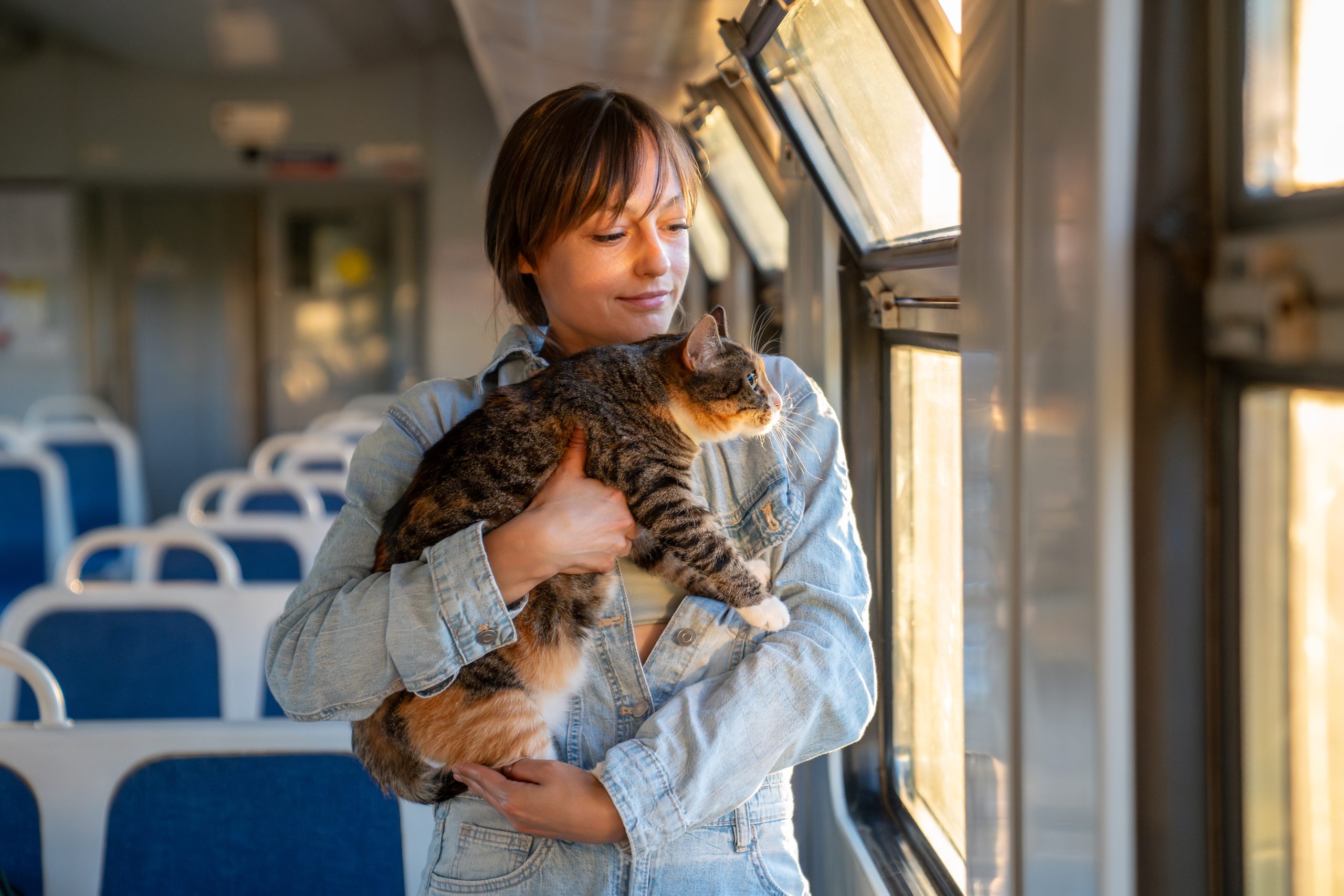

Moving with a cat isn’t the same as moving with a dog. Cats are deeply attached to territory, routine, and familiar scent. Even small changes in their environment can cause stress. When that change involves a new home or even a new country, preparation becomes everything. Over the years, we’ve helped families move with cats across town, across the country, and across oceans. And while every cat is different, the same principles consistently lead to smoother transitions. Whether you’re moving across country with cats, relocating overseas, or planning a long-distance drive, this guide walks through what to expect and how to prepare.
Why Moving Is Harder for Cats
Cats are territorial animals. Unlike dogs, who tend to bond primarily with people, cats bond strongly with their environment. When that environment changes, their sense of security changes with it. The American Association of Feline Practitioners explains that environmental disruption is one of the most common stress triggers for cats, often leading to behavioral or health changes during transitions. We’ve seen this firsthand. Even normally confident cats can hide, refuse food, vocalize excessively, or over-groom when routines shift. Understanding this biological reality helps owners plan with empathy rather than frustration.
Preparing Your Cat Before the Move
Preparation should begin weeks before moving day. We’ve found that gradual changes are far easier on cats than sudden ones. If possible:
-
Keep feeding times consistent.
-
Leave carriers out in the home so they become familiar spaces.
-
Begin short car rides to reduce travel sensitivity.
-
Update microchip information.
-
Schedule a visit with your veterinarian if travel is long-distance or international.
The American Veterinary Medical Association advises that cats traveling long distances should have an updated health evaluation and vaccination record. If your move involves international travel, veterinary timelines become even more important, as certain countries require specific documentation within defined windows.
Moving with a Cat Across Town or Locally
Even local moves can be stressful for cats.
On moving day, we always recommend:
-
Confine your cat in a quiet, secure room away from movers.
-
Keep food, water, litter box, and bedding in that room.
-
Transport your cat in a secure carrier.
-
Set up a “safe room” in the new home before allowing exploration.
We’ve seen that cats adjust best when introduced gradually to a new space. Start with one room containing familiar items, then slowly allow access to additional areas. The ASPCA provides guidance on gradual reintroduction to new environments for cats. In our experience, rushing this step often leads to hiding, escape attempts, or litter box issues.
Long Distance Moving with Cats by Car
Long car rides introduce new challenges. Noise, vibration, unfamiliar smells, and extended confinement can overwhelm even calm cats. When moving with cats by car, we advise:
-
Using a well-ventilated, appropriately sized carrier.
-
Securing the carrier so it does not slide.
-
Avoiding letting cats roam freely in the vehicle.
-
Planning quiet rest stops.
-
Offering water during longer stops.
-
Never opening the carrier outdoors.
We’ve had clients tell us that even normally docile cats can panic in unfamiliar parking lots. Secure containment is non-negotiable. If your cat experiences significant anxiety, consult your veterinarian before travel. The AVMA cautions against routine sedation during transport, but veterinarians may suggest alternatives for severe stress cases.
Moving Overseas with a Cat
International relocation is where planning becomes significantly more detailed.
Moving overseas with a cat or moving internationally with a cat typically involves:
-
Import permits
-
Rabies vaccinations
-
Microchipping
-
Health certificates
-
Possible blood titer testing
-
Country-specific timelines
The USDA Animal and Plant Health Inspection Service provides country-by-country pet travel requirements. We’ve seen families underestimate how precise these timelines can be. Some countries require rabies vaccinations to be administered within specific windows before departure. Others require laboratory testing that must be completed weeks in advance. Missing one step can delay travel or result in quarantine upon arrival. When moving abroad with a cat, documentation alignment is just as important as flight logistics.
Airline Travel Considerations for Cats
If your move involves flying, you’ll need to determine whether your cat will travel in the cabin or as manifest cargo. Airline policies vary, but most allow small cats to travel in the cabin inside an airline-approved carrier. Larger or multiple cats may need to travel through cargo programs designed for live animals. We’ve worked with many families who assumed all airlines operate the same way, but that’s rarely the case. Each airline maintains its own rules regarding:
-
Carrier dimensions
-
Weight limits
-
Number of animals allowed
-
Check-in procedures
-
Required documentation
The U.S. DOT outlines general airline oversight for live animal transport. Confirm requirements directly with the airline well before booking.
Helping Your Cat Adjust After the Move
Arrival isn’t the finish line. It’s the beginning of adjustment. Cats often settle faster when:
-
Their litter box is placed in a quiet, consistent location.
-
Familiar bedding is introduced immediately.
-
Feeding schedules remain unchanged.
-
New environments are introduced gradually.
-
Outdoor access (if applicable) is delayed for several weeks.
Best practices recommend keeping indoor-outdoor cats inside for at least two to three weeks after moving to prevent disorientation and escape. Patience is key. Some cats adjust within days. Others may take weeks.
When Professional Support Makes a Difference
While local moves are often manageable with preparation, long-distance and international moves quickly become more complex. We’ve worked with clients who initially planned to coordinate everything independently, only to discover how many pieces must align perfectly: veterinary timing, airline requirements, documentation approvals, customs clearance, and arrival procedures. Moving internationally with a cat is not just about booking a flight. It’s about compliance, coordination, contingency planning, and, of course, anything else you can do to ensure a smooth journey. That’s where experience matters.
Moving with Cats Is Possible With the Right Preparation
Cats are adaptable, but they need thoughtful transitions. With preparation, patience, and careful coordination, most cats adjust well to new homes, even across long distances. If you’re planning to move locally, across country, or overseas with your cat, our team at pet relocation team can help guide you through every step. From documentation and airline coordination to international relocation logistics. We’ve helped families relocate cats safely around the world, and we understand the details that make the difference between a stressful experience and a smooth one. If you’d like guidance tailored to your specific move, contact our team for a free quote and start planning your cat’s journey with confidence.