
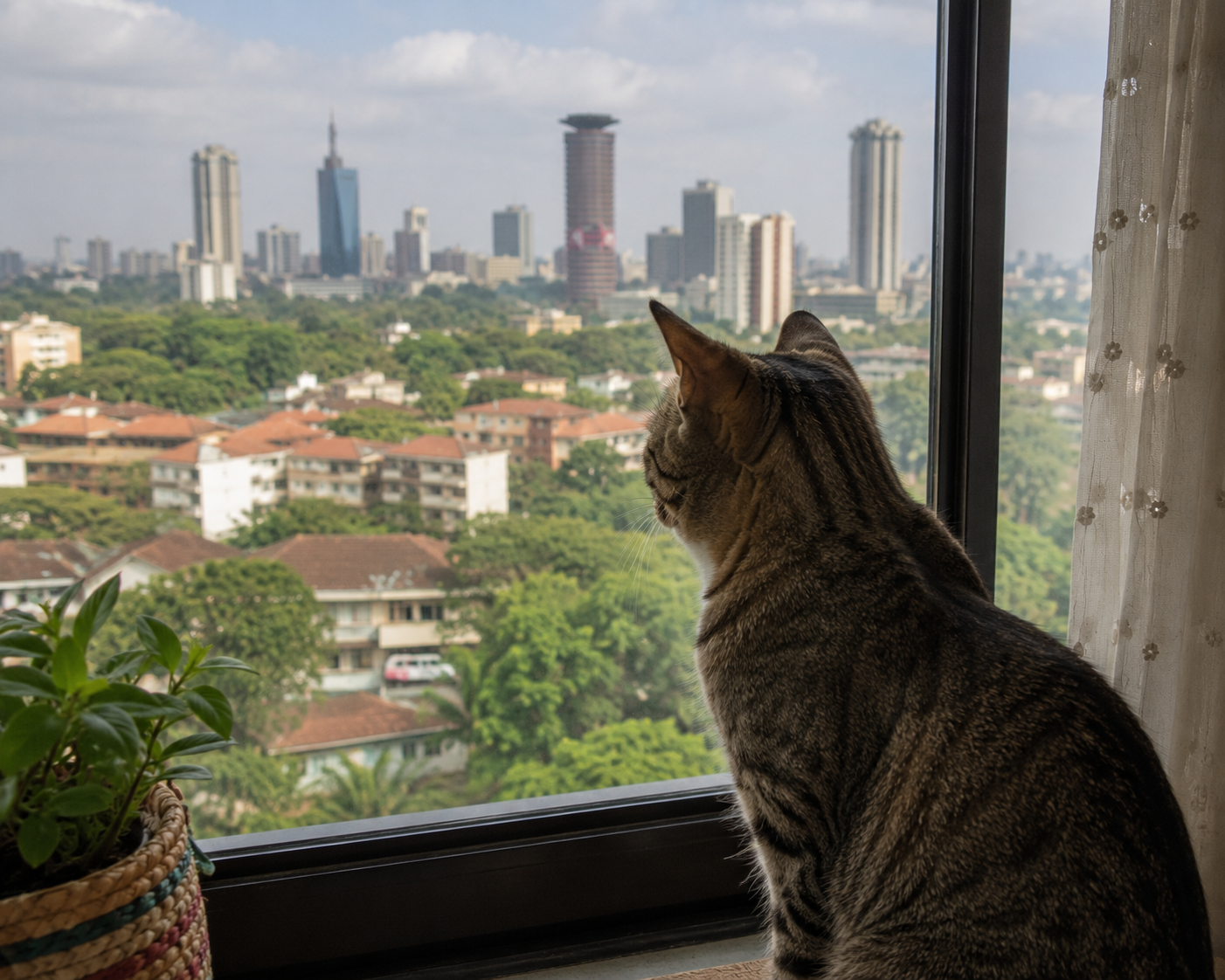
Can I move my dog or cat from the United States to Kenya?
Yes. Pet relocation to Kenya is very achievable, and there is no quarantine when the paperwork is done correctly. Your dog or cat needs a rabies vaccination given between 21 days and 12 months before entry, an import permit obtained in advance from Kenya’s Directorate of Veterinary Services (DVS), and an international veterinary health certificate completed by a USDA-accredited veterinarian and endorsed by USDA APHIS. An ISO microchip is strongly recommended for identification. Get these steps in the right order and your pet clears on arrival in Nairobi without a quarantine stay.
In This Guide:
Why Families Choose Animal Land for Kenya Pet Relocation
Pet relocation to Kenya hinges on getting the Directorate of Veterinary Services import permit, the rabies vaccination timing, and the USDA-endorsed health certificate to line up perfectly with your travel dates. A permit that hasn’t been approved before departure, or a rabies vaccination that falls outside the 21-day-to-12-month window, is the kind of detail that causes problems at the airport.
Animal Land Pet Movers has been relocating dogs and cats internationally since 1998, and we oversee dozens of moves to Nairobi every year. That regular, hands-on experience with the Kenyan requirements means our team knows the current permit process, the carriers that serve Nairobi, and exactly how to sequence each step so your pet arrives and clears smoothly.
Pet Relocation to Kenya: Step by Step Requirements
The U.S.-side endorsement runs through the USDA APHIS pet travel process, and the destination requirements are set by Kenya’s Directorate of Veterinary Services (summarized on the Kenya Embassy pet import page). The core steps are below.
Step 1: Microchip
An ISO-compliant 15-digit microchip (ISO 11784/11785) is strongly recommended so your pet’s identity can be matched to its vaccination and certificate records. Microchip your pet before the rabies vaccination so the records align, and so identification is in place for any future travel.
Step 2: Rabies and Required Vaccinations
All dogs and cats over three months of age must be vaccinated against rabies between 21 days and 12 months before entering Kenya. Multi-year rabies vaccines are accepted only if administered within the 12 months before import. In addition, dogs should be vaccinated against distemper, canine hepatitis, parvovirus, parainfluenza, and leptospirosis.
Step 3: Import Permit From the Directorate of Veterinary Services
Before your pet travels, you must obtain an import permit from Kenya’s Directorate of Veterinary Services (under the Ministry of Agriculture). The permit is applied for in advance, is typically valid for about 90 days, and covers a single consignment — so it should be timed to your travel dates. The approved permit must be in hand before departure.
Step 4: USDA-Endorsed Health Certificate
A USDA-accredited veterinarian must complete the international veterinary health certificate for Kenya, which is then endorsed by USDA APHIS through VEHCS. The certificate is issued shortly before travel and must confirm your pet is healthy and meets the vaccination requirements. The endorsed original travels with your pet.
Approved Routes and Carriers
Pets traveling to Kenya must move on an airline and routing that accepts live animals for the entire journey into Nairobi. Not every carrier or connection is suitable, and aircraft limitations and seasonal heat considerations can affect which routes work.
Animal Land confirms the carrier and routing before booking, verifies live-animal acceptance on every leg into Jomo Kenyatta International Airport (NBO), and coordinates the cargo so your pet’s travel matches the validity window of the import permit and health certificate.
Crate Training Your Pet for Kenya
Your pet must travel in an IATA-compliant travel crate that is correctly sized — large enough to stand, turn, and lie down comfortably. Airlines will refuse a pet whose kennel is too small, so getting the size right is essential. Use our guide on How to Measure Your Dog for a Flight Kennel to choose the correct dimensions.
Crate training should start as early as possible. Pets that are comfortable in their kennel handle long-haul travel far better than those encountering it for the first time at the airport. Large dogs may need custom crates, which take time to source — another reason to plan early.
How Much Does It Cost to Move a Pet to Kenya?
The total cost of pet relocation to Kenya depends on your pet’s size, your departure city, the cargo route, and the services you need. Typical cost components include:
- Veterinary visits, microchip, and vaccinations
- Kenya DVS import permit fees
- USDA APHIS endorsement fees
- Health certificate preparation
- IATA-approved crate purchase (if needed)
- Air cargo charges to Nairobi
- Airport handling and arrival processing fees
- Professional pet relocation coordination
Because air cargo rates and routing vary by season and availability, Animal Land provides personalized quotes rather than published price ranges. For a fuller breakdown of what drives international pet-moving costs, see our International Pet Relocation Cost guide. To get an estimate for your specific move, request a free quote.
Pet Relocation to Kenya: Moving to Nairobi
Nairobi is the most common destination for families relocating pets to Kenya, with most pets arriving at Jomo Kenyatta International Airport (NBO). On arrival, your pet’s documents — the DVS import permit, the USDA-endorsed health certificate, and vaccination records — are reviewed by veterinary officials. With complete, correct paperwork there is no quarantine, and pets are cleared to go home with you.
Nairobi neighborhoods popular with relocating families — such as Karen, Lavington, Runda, and Westlands — are known for green space and are well suited to pets. Animal Land can help connect you with trusted local veterinarians and pet services as part of your relocation.
How Long Does It Take to Move a Pet to Kenya?
The timeline is driven mainly by the rabies vaccination and the import permit rather than flight time. Kenya does not require a rabies titer test, so there is no multi-month waiting period as there is for rabies-free countries. If your pet is already current on a valid rabies vaccination, the practical preparation window is mostly the time needed to secure the DVS permit and the USDA-endorsed health certificate. For most families, pet relocation to Kenya takes between 3 and 6 weeks from the time preparation begins to arrival day.
Frequently Asked Questions
Can my cat travel to Kenya without quarantine?
Yes. Cats that meet the rabies vaccination, import permit, and USDA health-certificate requirements enter Kenya without quarantine. A microchip is recommended for identification.
Do I need a professional pet relocation company for a move to Kenya?
It is not legally required, but the combination of the DVS import permit, the rabies vaccination timing, and the USDA endorsement leaves little room for error — and mistakes can cause delays on arrival. Most families find professional coordination well worth it, especially for a destination Animal Land handles routinely.
Which airlines fly pets to Kenya?
Availability varies by route and season, and not every airline accepts pets on every leg into Nairobi. Animal Land confirms live-animal acceptance and books the cargo space as part of the relocation process.
Is a rabies titer test required for Kenya?
No. Kenya does not require a rabies antibody titer test for pets from the United States. A current rabies vaccination given between 21 days and 12 months before entry is required.
What are the most common mistakes when moving a pet to Kenya?
The most common mistakes are traveling before the DVS import permit is approved, a rabies vaccination that falls outside the 21-day-to-12-month window, an out-of-date health certificate, and booking a route that isn’t confirmed for live animals. Animal Land sequences each step to avoid these.
Does my pet need an import permit before traveling to Kenya?
Yes. An import permit from the Directorate of Veterinary Services must be obtained before your pet travels. It is valid for about 90 days and covers a single consignment, so timing it to your travel dates matters.
Get a Quote for Pet Relocation to Kenya
Animal Land has offices in Atlanta, London, and across the globe, and oversees dozens of moves to Nairobi each year. Contact our team for a free quote and a step-by-step plan for your move to Kenya.
About Animal Land
Animal Land Pet Movers
Animal Land Pet Movers is an international pet relocation company established in Atlanta in 1998. With offices around the globe, our team coordinates full-service, door-to-door dog and cat transport to more than 100 countries — including dozens of moves to Nairobi each year — managing microchip and vaccination compliance, USDA APHIS health-certificate endorsement, destination import permits, IATA-compliant crating, and air cargo logistics.
- Relocating pets safely since 1998 — more than 25 years of experience
- IPATA member and USDA-registered
- Offices in Atlanta, London, Hong Kong, Johannesburg, and Los Angeles
- Full-service, door-to-door international pet transport
Request a free quote or contact our team to start your pet’s move.